Download PDF

This week’s double Torah portions of Va’Yakhel and Pekudei often try the patience of readers. The unrelenting focus on the smallest details in the Mishkan’s construction (the length of the curtains, the composition of the metals, the precise placement of the rings) can feel tedious, a long, dry preamble to the human-centric drama of Sefer Va’Yikra.
This sense of tedium is largely a function of our reading order. The sequential placement of these parshiyot in Shemot is deeply misleading: it suggests a simple chronology where God first commands the building of the Temple and its purpose is simply to serve as the exclusive venue for the sacrifices, which are detailed and spelled out elaborately in the following Sefer of the Torah, Va’Yikra. In this common view, the Temple itself is the means, and the korbanot are viewed as the ultimate end.
I however believe that these parshiyot are, in fact, the very heart of the matter, since the minutiae of the Tabernacle embody a profound spiritual essence. The true relationship is the reverse: the korbanot are the means; the dwelling of humanity in the Divine Presence, the sheer aesthetic experience of the Temple, is the ultimate end. (Maimonides’ Guide for the Perplexed 3:47 might be read as supporting this thesis.)
Following the transcendent encounter at Sinai, the moment of blissful intertwining between Lover and beloved, a necessary separation occurred. Yet, God’s intense desire was to continue that intimate, enduring relationship. To achieve this, God instructed us to design a breathtaking, ornate abode—an unparalleled gallery adorned with precious metals and exquisite tapestries. These were not mere decorations but artworks whose aesthetic perfection has the power to induce radical amazement. Radical amazement, by its very nature, is transcendent. And transcendence is the gateway to the godly. When our senses are overwhelmed by the ineffable, when our minds soar upward and outward, we have penetrated the divine realm, and the human spirit achieves a profound unity with the Divine. For such art to have this profound, transformative power, every minute detail, every precisely measured thread, matters. The very minutiae that bore some is the foundation of its majesty.
The korbanot are thus designated as the gravitational force, the incentive mechanism that draws us in. Our deep and powerful yearning for expiation or expression of thanks provides the perfect impetus to make the arduous pilgrimage to the Temple. Once we are physically present, our attention shifts from the practical offering to the profound atmosphere; the sheer beauty and ornateness of the sanctuary then has the power to influence and impact us, triggering that transcendent state. This dynamic is underscored by the limited role of the individual bringing the offering, whose duty is often merely to bring it and little more, as the Kohanim take over the remainder of the process. Why is the personal involvement of the offerer so curtailed? Because the ultimate goal is for people to simply BE THERE—to stand within the presence of the Divine and be transformed by its perfection.
This understanding of the Temple as a visually and aesthetically centered experience is powerfully supported by Chazal in the Talmud. The first daf of Masechet Chagiga emphatically stresses that the purpose of Aliyah La’Regel, the thrice-yearly pilgrimage, is לראות ולֵירָאוֹת, to see and to be seen. The visual encounter is so crucial to the pilgrimage that the Gemara derives from it the exemption of those unable to perceive the Temple’s beauty from the mitzvah of Aliyah La’Regel. If one cannot have the visual encounter, the essential purpose of the arduous journey is curtailed. The Temple was not primarily an auditorium for audible instruction or a venue for olfactory offerings; it was a visual spectacle designed to induce awe through its perfect, tangible beauty. We were invited to see. Encountering the Divine is a sensory experience, an aesthetic engagement that can be physically—and visually—experienced in the world.
This profound aesthetic and visual goal (this pursuit of a transcendent experience grounded in tangible beauty) forces a necessary pivot in our religious practice. With the singular, perfect vehicle of the Beit Hamikdash no longer physically present, the essential spiritual task is clear: to seek alternative venues and experiences that can continue to induce that same ‘radical amazement’ and nourish the reciprocal love between humanity and the Divine.

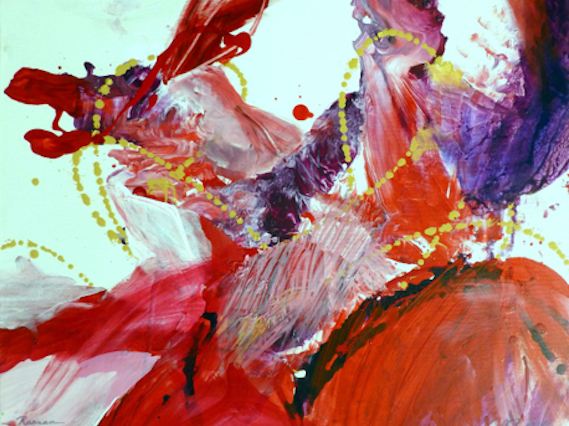
In the wake of the Temple’s destruction, this task falls upon us: we must frequent spaces that induce radical amazement, catapulting us into that transcendent zone where humanity and divinity intersect. Art houses, alongside batei midrash, serve as our modern מקדשי מעט, our mini-temples where we seek the ineffable. For this reason, the perusal of art becomes a profoundly spiritual and religious exercise, offering a necessary reprieve from our daily grind and transforming the temporal into a celestial space, in effect recreating the transcendent experience of the Beit Hamikdash.
Ultimately, this aesthetic and transcendent ideal remains the central aspiration as I pray thrice daily for the rebuilding of the Beit Hamikdash. More than the sacrificial rite—the precise details of which remain a source of discussion—it is the return to that perfect aesthetic space, the sanctuary of unadulterated beauty, that is the yearning of my soul; it is the vision of experiencing the Divine, seeing Him, as it were, with the mind’s inner eye, that directs my prayer. While the question of the sacrifices’ future is significant, it is ultimately immaterial to this core desire, as the korbanot were always meant to be merely the means to an end. The deep longing for that aesthetic perfection, for the radical amazement and transcendence it fosters, will remain the primary focus—the very art of awe that transforms mere minutiae into divine majesty.


 Daf of the Day